Protecting Victims After Devastating Collisions
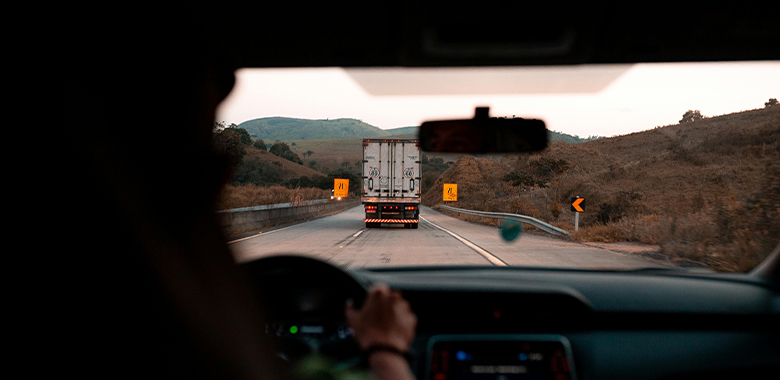
Highway 101 is the backbone of Marin County, carrying not just daily commuters but a steady stream of commercial trucking traffic between San Francisco, Sonoma County, and points further north. Add in Highway 37’s connection to industrial areas near Novato, and Marin sees far more large truck traffic than its scenic reputation might suggest. With more commercial trucks sharing these busy roadways with passenger vehicles, the risk of serious truck-related collisions becomes a significant concern. When a fully loaded commercial truck collides with a passenger vehicle on Marin County roads, the result is rarely a minor accident; instead, these crashes often lead to devastating injuries or, in the worst cases, loss of life.
At Flahavan Law, we represent people who have been seriously injured or lost a loved one in truck accidents throughout Marin County. These cases require more than a standard auto accident claim because trucking companies often have insurers, defense attorneys, and risk management teams working immediately after a crash to protect their interests. We move just as quickly to investigate what happened, preserve critical evidence, and protect your rights as we pursue the full compensation you deserve.
Why Truck Accidents Are Different From Car Accidents
A collision between two passenger cars and a collision involving a large commercial truck are not the same kind of case, and they shouldn’t be treated the same way. These are some of the many key differences in the cases:
- The physics are unforgiving: A fully loaded tractor-trailer can weigh 20 to 30 times as much as the average passenger car (up to 80,000 pounds). That difference in mass means even a moderate-speed collision with a truck can produce forces far beyond what a car’s safety systems are designed to absorb.
- Multiple parties may share liability: A car accident often comes down to one driver’s negligence, whereas a truck accident can involve shared liability between the driver, the trucking company that employed or contracted them, the company that loaded the cargo, a maintenance provider, a leasing company, and even the manufacturer of a defective part. All of these parties may carry separate insurance coverage.
- Federal regulations apply: Commercial trucking is governed by an extensive set of federal rules through the Federal Motor Carrier Safety Administration (FMCSA), covering everything from how many hours a driver can be on the road to how cargo must be secured. When a trucking company or driver violates one of these regulations, it can be powerful evidence of negligence.
- Evidence is more complex and more fragile: Modern commercial trucks are equipped with electronic logging devices (ELDs) and often with onboard event data recorders similar to a “black box,” which capture speed, braking, and hours-of-service data in the moments before a crash.h. Trucking companies are not always required to preserve this data indefinitely, which is one of the biggest reasons early legal action matters in truck accident cases.
Truck Traffic and Accident Patterns in Marin County
Marin’s road network wasn’t built for the volume of commercial freight it now carries, and certain corridors see truck-involved incidents more than others. Highway 101 is the county’s primary commercial artery, carrying freight traffic between the Golden Gate Bridge, San Rafael, Novato, and Sonoma County to the north. It’s also one of the most congested commuter routes in the North Bay, which creates a dangerous mix of stop-and-go traffic and large trucks that need significant distance to slow down or stop. Marin has seen serious truck-involved crashes on this stretch in recent years. Highway 37, connecting Novato to Vallejo and the greater Highway 80 corridor, also carries significant industrial and commercial traffic and is known for narrow shoulders, flooding in low-lying sections, and a mix of high-speed through-traffic and merging trucks. Local surface streets near industrial and distribution areas, including parts of San Rafael, Ignacio, and Point San Pedro Road, see delivery trucks and freight vehicles navigating routes that were never designed for repeated heavy-vehicle traffic. We monitor these patterns because they inform how we investigate a case. A truck accident on a congested stretch of 101 during commute hours raises different questions than a rollover on Highway 37, and our team builds each case around the specific conditions that led to the crash.
Common Causes of Truck Accidents
Truck accidents are rarely the result of a single, isolated mistake. More often, they trace back to systemic pressures within the trucking industry itself.
- Driver Fatigue: Federal hours-of-service rules limit how long a commercial driver can be on the road without rest, but trucking companies under pressure to meet delivery schedules sometimes push drivers past safe limits, or drivers falsify logs to avoid missing deadlines. A fatigued driver reacts more slowly, misjudges distances, and is more likely to drift out of a lane or fail to brake in time.
- Improper Cargo Loading: Cargo that isn’t properly secured or distributed can shift during transport, causing a truck to become unstable, jackknife, or roll over, particularly on curves or during sudden braking.
- Poor Vehicle Maintenance: Brake failure, tire blowouts, and steering or suspension problems are far more dangerous in an 80,000-pound vehicle than in a passenger car. Trucking companies are required to maintain their fleets to federal standards, and failure to do so can directly cause catastrophic crashes.
- Distracted or Inexperienced Driving: Phones, dispatch communications, and in-cab technology can pull a driver’s attention away from the road for critical seconds. Inadequate training on handling a large vehicle in Marin’s hilly, curving terrain compounds the risk.
- Driving Under the Influence or Impairment: Drug and alcohol testing requirements exist for commercial drivers specifically because impairment in a vehicle this size is so much more dangerous. Violations still occur.
- Blind Spots and Unsafe Lane Changes: Large trucks have substantial blind spots, known as “no-zones,” on all four sides. Merging or changing lanes without accounting for a passenger vehicle in these areas is a leading cause of sideswipe and underride collisions.
- Weather and Road Conditions: Marin’s coastal fog, wet pavement, and hilly terrain on routes like Highway 37 and sections of 101 require adjusted speeds and following distances that not every commercial driver observes.
Injuries Caused by Truck Accidents and Their Lasting Effects
Because of the size and weight differential involved, truck accident injuries tend to be more severe than injuries from a typical car accident, and their effects often extend far beyond the initial hospital stay. These are the most common injuries we see:
- Traumatic Brain Injuries: The force involved in a truck collision can cause a TBI even without direct head impact. Beyond the immediate medical crisis, TBIs can affect memory, concentration, personality, and the ability to work, sometimes permanently, requiring ongoing cognitive therapy and support.
- Spinal Cord Injuries: Damage to the spinal cord can result in partial or complete paralysis. Beyond the physical limitations, spinal cord injuries often require a lifetime of adaptive equipment, home modifications, personal care assistance, and specialized medical treatment, all of which carry substantial long-term costs.
- Crush Injuries and Amputations: The size differential in truck accidents means passenger vehicle occupants are at real risk of crush injuries to limbs, sometimes requiring amputation. These injuries affect not just physical mobility but also a person’s ability to return to their prior occupation and daily life.
- Internal Injuries: The force of a truck collision frequently causes internal bleeding and organ damage that isn’t immediately apparent. Delayed internal injuries can become life-threatening if not caught quickly, which is one reason we always recommend prompt medical evaluation after any truck accident.
- Multiple and Complex Fractures: Truck accidents often produce fractures severe enough to require surgical repair, plates, rods, or screws, and extended physical therapy. Some fractures never fully heal to pre-accident strength, leading to chronic pain and reduced range of motion.
- Burn Injuries: Fuel tank ruptures and post-collision fires are a real risk in serious truck accidents. Burn injuries often require multiple surgeries, skin grafts, and long-term scar management, along with significant emotional recovery.
- Wrongful Death: Given the forces involved, truck accidents are disproportionately likely to be fatal. Families losing a loved one in a truck accident face not only grief but the sudden loss of financial support and stability.
The common thread among these injuries is that the bill doesn’t stop when you leave the hospital. Our team builds every case around the full arc of your recovery, not just the initial treatment.
Compensation Available in Truck Accident Cases
Truck accident claims often involve more serious potential damages than standard car accident cases, both because injuries tend to be more severe and because commercial insurance policies typically carry higher coverage limits than personal auto policies. Depending on your case, compensation may include:
- Past and future medical expenses, including surgery, rehabilitation, and long-term care
- Lost wages and diminished future earning capacity
- Pain and suffering
- Permanent disability or disfigurement
- Home and vehicle modifications for permanent injuries
- Loss of consortium for spouses and family members
- Wrongful death damages, including loss of financial support and companionship
- Punitive damages, in cases involving egregious conduct such as driving under the influence or knowingly violating hours-of-service regulations
Because multiple parties may share liability in a truck accident, and because those parties often carry substantial commercial insurance policies, thoroughly identifying every responsible party is one of the most important things our team does for every client.
Why Acting Early Matters in Truck Accident Cases
Truck accident cases move on a faster timeline than many people realize because the trucking industry has systems in place to respond immediately after a serious crash. Trucking companies often dispatch investigators to the scene within hours, while insurance adjusters and defense attorneys may begin building their case before an injured person has even left the hospital.
At the same time, critical evidence can disappear if it is not preserved quickly. Commercial trucks contain electronic systems (including event data recorders, electronic logging devices, and GPS tracking technology) that may provide important details about what happened, such as vehicle speed, braking patterns, and whether the driver complied with hours-of-service requirements. However, this information may be overwritten, lost, or routinely deleted unless steps are taken to preserve it through formal legal notices, such as a litigation hold or spoliation letter. Other records that may be essential to a truck accident claim, including driver logs, maintenance records, inspection reports, and drug and alcohol testing results, may also require prompt action to obtain. Federal trucking regulations create important requirements for commercial carriers, but proving violations often depends on securing these records while they are still available.
California’s statute of limitations also creates important deadlines. In most personal injury cases, an injured person generally has two years from the date of the crash to file a lawsuit. Claims involving a government entity may require a formal notice within six months. Because truck accident cases often require extensive investigation and evidence preservation, contacting our team as soon as possible can provide more time to build a strong claim.
How Flahavan Law Helps Truck Accident Victims
Truck accident cases require thorough investigation and experienced representation. Flahavan Law focuses on serious and catastrophic injury cases, bringing the resources and preparation needed to handle complex trucking claims. We act quickly to preserve critical evidence and investigate all potential sources of liability, from driver conduct and trucking company safety practices to cargo loading and vehicle maintenance. Our team works with accident reconstruction and industry experts when needed to understand how a crash occurred and challenge the trucking company’s version of events. We also handle aggressive insurers and defense teams while preparing every case for trial, giving clients the strongest position possible to pursue fair compensation.